


Joint Ventures are Transforming the Future of Saudi Industry!
- August 21, 2025
- Posted by: Marketing
- Category: Blog
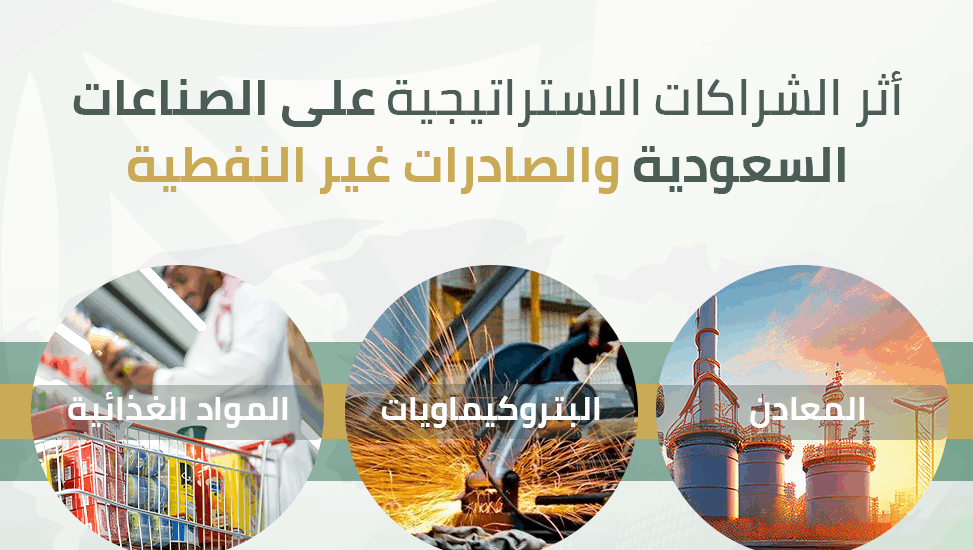
The Impact of Strategic Partnerships on Saudi Industries and Non-Oil Exports
Strategic partnerships (joint ventures) are a key tool for economic transformation under Saudi Arabia’s Vision 2030, by promoting diversification, knowledge transfer, and supporting non-oil exports. But what is the actual impact of these partnerships on national industries and the global competitiveness of Saudi products?
- Vision 2030 and Economic Diversification Through Partnerships
Vision 2030 aims to reduce reliance on oil and increase the contribution of non-oil sectors to the national income. To achieve this, the state has introduced strategic partnerships as a central tool to drive the growth of national industries, especially in new industrial and commercial fields.
Statistics show that non-oil exports (including re-exports) rose to 515 billion riyals ($137 billion) in 2024, an increase of approximately 13% over the previous year. This is more than double the amount since the launch of the Vision in 2016.
- Growth in Non-Oil Exports and Enhanced Competitiveness
Partnerships represent tangible opportunities to access new markets. Non-oil exports recorded an annual growth of 24.6% in April 2025, driven by a 72% increase in re-exports, while national non-oil exports grew by about 6.8%. This confirms the importance of logistical infrastructure and partnerships in expanding export capabilities.
Additionally, in April 2025, Saudi Arabia recorded a trade surplus in non-oil exports with Gulf countries—a significant leap of more than 200% compared to the same month in the previous year—driven by the flow of diverse exports and growing regional economic integration.
- Key Industrial Sectors and the Role of Partnerships
Data shows that high-value-added sectors such as chemicals (20–23%) and plastics and rubber (20–21.9%) are among the strongest performers in non-oil exports. Achieving real leaps in these industries requires strategic partnerships that enhance productivity, product quality, and export efficiency.
For example, the Indian company Jindal Saw entered a strategic partnership with Saudi entities to establish new companies in the steel and industrial goods sectors. This is a clear model for leveraging external technology and expertise to support local production.
- Institutional Support and Government Partnerships
Entities like the Saudi Exports Development Authority (SEDA) play a prominent role in promoting the export of non-oil products through certifications like “Made in Saudi” and supporting exports with financing, regulation, and brand improvement. The National Development Fund also provides loans and guarantees to facilitate market access and the growth of small and medium-sized enterprises (SMEs) in exporting.
These institutions reflect the essential role of supporting local and international strategic partnerships, while boosting confidence and competitiveness in the global market.
- Challenges and Obstacles
Despite progress, partnerships face some challenges, such as difficulty in accessing commercial financing, varying levels of technology, and over-reliance on importing manufacturing inputs. Small and medium-sized manufacturing units, in particular, face difficulty in expanding and complying with international standards.
However, these challenges can be overcome through partnerships by transferring technology, training personnel, and promoting integrated industrial development.
- Recommendations to Enhance the Impact of Partnerships
- Increase partnerships in promising sectors such as chemicals, automobiles, clean energy, and logistics.
- Expand financial and technical support programs from government institutions for new exporters.
- Build external strategic partnerships to enter new markets, such as partnerships with Japanese and European companies to access and export to their markets.
- Strengthen the “Made in Saudi” brand by supporting quality and innovation through joint educational and technical programs.
- Encourage industrial innovation by creating joint technology and industrial zones that provide a suitable environment for local industries.
- Conclusion
Strategic partnerships (joint ventures) play a pivotal role in supporting Saudi industries and non-oil exports. Statistics show clear growth in non-oil exports, a trade surplus with Gulf countries, and a tangible impact of local and global partners on the development of the industrial sector. For this momentum to continue, these partnerships must be reinforced with strong institutional financial and executive support, with a focus on innovation and the quality of local products.
How can we help you?
Contact us at the Consulting WP office nearest to you or submit a business inquiry online.